


Srī Gotamī ārāma monastery, located in the southwestern part of Sri Lanka in Olaboduwa near the town of Horana, is the home monastery of Venerable bhikkhunī Visuddhi therī, where she ordained, lived, and practiced after her arrival from Europe between 2003 and 2009.
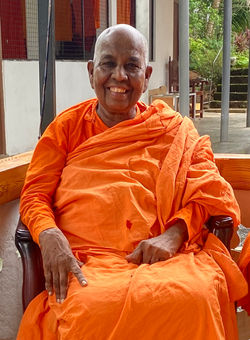
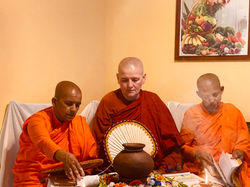
Venerable bhikkhunī Matale Vijitha and Venerable bhikkhunī Dhamma Dharshika are among the most senior Theravāda nuns not only in Sri Lanka but also worldwide. In addition to teaching Dhamma and guiding meditation practice, they have long been devoted to serving others – caring for the sick and dying, offering emotional support and comfort, and providing basic necessities to people from nearby villages.
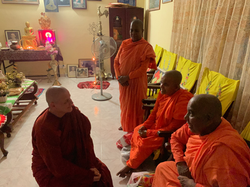
Their modest monastery serves as a place of refuge and assistance. Through their compassion and selfless service, many people are drawn to the monastery, bringing offerings that are then distributed to those in need. The nuns also support children by teaching them the foundations of ethical conduct, the Buddha’s teachings, and meditation. They care for pregnant women and provide temporary shelter for those affected by natural disasters.
Due to her seniority, Venerable bhikkhunī Vijitha has ordained many novices (sāmaṇerī) in this region of Sri Lanka, as well as several nuns from the West. She is an experienced teacher of dhamma-vinaya and also teaches Sanskrit and Pāli.
As these Venerable nuns were the teachers of Venerable bhikkhunī Visuddhi, the Association Karuṇā Sevena supported them over many years as an expression of gratitude and respect. This support took place approximately from 2012 to 2025 and was primarily focused on providing their basic needs, especially during their later years and periods of declining health. In recent years, the support was mainly directed toward medicine, healthcare, and clothing.
This project has now been completed. However, these Venerable nuns remain deeply respected figures, whose lives dedicated to the Dhamma, to service, and to compassion continue to be an inspiration to many.
 |  |
|---|---|
 |  |
 |  |
 |  |
 |  |
 |  |
 |  |
 |  |
 |  |
 |  |
 |  |
 |  |
 |  |
 |  |
 |  |
 |  |
 |  |
 |  |
 |  |
 |
Support of the Project Suriya Lamai
Full name of the account holder: Spolek Karuna Sevena
Bank account: 6855679001/5500
IBAN: CZ49 5500 0000 0068 5567 9001
SWIFT: RZBCCZPP
Address of the recipient: Slezska 3; City: Prostejov, Zipcode: 79601; Country: Czech Republic
Email: karuna.sevena.en@gmail.com
The intention of the project Suriya Lamai “The Children of the Sun” is to enable children from underprivileged families to develop and educate themselves and to provide them with basic needs.
The donation is tax-deductible in the Czech Republic.
Please state the reason for the donation with the following note" For the Children of SL."
Neither of the above is a public collection, and therefore we ask all donors to add their contact information to their gift, so that we can issue a donation agreement contract or a donation receipt. We thank all the donors.
Links for donation:


We cooperate:
